
Categories
Blog

Optimize Your Portfolio with Tech Solutions

Introduction

Building a strong investment portfolio is key to achieving long-term financial goals. Whether you’re a newbie investor or a seasoned professional, understanding the dynamics of portfolio construction can greatly impact your success. The process involves selecting a mix of assets such as stocks, bonds, and commodities that align with your investment objectives. But let’s face it, creating a rock-solid portfolio isn’t always straightforward. Various challenges like diversification and risk management often pop up along the way. That’s where technology enters the picture. With the right tools and solutions, you can address these common problems easily, making your portfolio stronger and more resilient.

So, why turn to technology for help? Simply put, it makes everything smoother. Technology provides innovative solutions that simplify the complex parts of portfolio construction. From AI-powered analytics to customizable management tools, there’s a lot on offer to help investors tackle potential hurdles. This article will offer a peek into some of these tech-driven solutions, ensuring you build better and more successful portfolios.

Identifying Common Portfolio Construction Problems

Creating a diversified and balanced portfolio sounds easy, but it comes with its own challenges. Here are some typical issues you might face:

– Diversification Dilemmas: Ensuring your portfolio isn’t too heavily weighted in a single asset class can be tricky. Too much of one thing and you’re exposing yourself to unnecessary risk.

– Risk Management: Balancing potential returns with acceptable risk levels can be a juggling act, especially when market conditions keep changing.

– Asset Allocation: Deciding how much of your money should go into different types of investments can become overwhelming.

Each of these problems can significantly affect how well your investments perform over time. A poorly diversified portfolio might see big losses if one market takes a downturn, while misjudged risks can lead to unnecessary financial stress. Addressing these challenges with precision is crucial to avoid pitfalls and to better position your investments for growth.

Fortunately, technology offers a helping hand here. By incorporating technological solutions like AI insights and tailor-made analytics, you can effectively counter these issues, making your investment journey smoother and more rewarding.

Leveraging AI for Enhanced Portfolio Construction

AI is proving to be a game-changer in portfolio construction, offering precise solutions to several common issues. By using AI, investors can achieve a portfolio that is not just diversified but also aligned with their individual goals. AI tools analyze vast amounts of data to provide insights that were previously unimaginable, helping investors make informed decisions.

AI works by understanding complex market patterns and predicting potential risks. This allows investors to adjust their strategies proactively, minimizing potential losses. The technology continually learns from market behaviors, ensuring that the portfolio remains aligned with the investor’s goals even as conditions change.

An example of AI in action is its capacity to process millions of market scenarios and provide suggestions for the optimal allocation of assets. This means you can confidently allocate resources across different investments while keeping risks in check. The insights AI offers aren’t just useful—they’re adaptable, changing with new market information to give the best advice.

Utilizing Advanced Analytics for Better Decision Making

Advanced analytics stand out as tools that turn raw market data into clear, actionable insights. These analytics help investors understand how different market factors affect their portfolios. Whether it’s macroeconomic trends or shifts in specific sectors, advanced analytics provide a roadmap for making smarter investment choices.

For instance, using data analytics can reveal trends that are not immediately obvious. Investors might discover emerging industries to invest in or identify sectors that are about to decline. This kind of foresight is invaluable when trying to optimize a portfolio’s performance and avoid unnecessary risks.

Using analytics, investors can make data-driven decisions rather than relying on gut feelings or unverified predictions. Having a clear picture of the market landscape enables strategic planning, contributing to the crafting of a robust investment strategy.

Incorporating Customizable Tools for Portfolio Management

One of the biggest perks of using technology in portfolio construction is the availability of customizable tools. These tools allow investors to shape their portfolios according to very specific needs and preferences. Whether you like a conservative approach or prefer higher risk with a chance for greater returns, customizable tools help make these visions a reality.

For instance, some tools let you set up automatic adjustments based on certain market conditions. These adjustments ensure that your portfolio remains optimal without needing constant manual intervention. You can decide everything from sector weightings to individual asset preferences, which keeps your investments aligned with your overarching goals.

To sum it up, technology provides investors with comprehensive solutions to streamline portfolio management efforts. It reduces the complexity typically involved in maintaining a well-balanced investment strategy and permits a more engaged approach to managing your financial future.

Elevating Portfolio Construction with AI and Advanced Technology

Harnessing the power of technology in portfolio construction offers unmatched advantages. From AI that enhances diversification and mitigates risks, to advanced analytics that guide investment decisions, the capabilities available today are remarkable. Adding customizable tools into the mix further allows portfolios to be tailored to fit investor preferences seamlessly.

It’s clear that technology doesn’t just simplify the task of portfolio management—it transforms it. By moving beyond traditional methods and embracing these innovative solutions, investors can position themselves for lasting success in their financial endeavors.Embrace the future of financial growth by utilizing cutting-edge tools and insights for building a strong portfolio. With the dynamic tools and innovative solutions bondIT offers, you can elevate your investment strategies to new heights. Discover more about improving your portfolio construction and see how modern techniques can transform your investment journey.


Categories
Blog

Managing Staff Resistance in In-Sourced Finance

Introduction

Deciding to in-source fixed income management is a step many companies consider for enhancing control and efficiency. By managing these investments internally, organizations can gain a deeper understanding of their portfolios and possibly save on costs associated with third-party services. In-sourcing can also allow for more tailored strategies, adapting investments quickly as market conditions change. Despite these benefits, this change often meets resistance from staff.

Facing staff resistance is common when introducing any shift in protocols, especially with something as significant as fixed income management. Employees might worry about taking on additional tasks, the security of their current roles, or adapting to new systems. Understanding these concerns is the first step in addressing them effectively. By openly discussing these issues, companies can smooth the transition process, ensuring that staff adaptation is as seamless as possible.

Identifying Sources of Resistance

When tackling staff resistance, it’s important to first pinpoint where it stems from. Here are some common reasons employees might be hesitant:

– Fear of job loss: Employees may worry that bringing tasks in-house could lead to job cuts if external roles are no longer needed.

– Increased workload: Taking on fixed income management internally might seem like it will add to their current responsibilities, leading to stress or burnout.

– Discomfort with new technology: Introducing new tools or platforms can be daunting for some, especially if they’re not tech-savvy.

Understanding these concerns to address them effectively is essential for a smooth transition. You might recall times when changes sparked anxiety in a workplace setting. For instance, when a company decided to switch entirely to digital communication tools, it initially caused discomfort due to lack of familiarity. But, with clear reasons for the change and adequate training, the transition eventually went smoothly, making daily operations more efficient.

By recognizing these fears, companies can take proactive steps to address them before they grow into larger issues. It all starts with conversations that promote trust and clarity. In the next section, we’ll explore how communicating benefits and offering structured support can pave the way for a successful transition.

Communicating Benefits and Providing Training

Once you’ve identified the root of resistance, moving forward with clear communication is key. Employees need to understand why the shift toward in-sourcing fixed income management is taking place and how it benefits not just the company, but them as well. Highlighting these advantages can go a long way in easing their concerns. You might tell them about the opportunity for developing new skills, potentially leading to career advancement. Sharing such benefits in a simple and honest way can shift the narrative from apprehension to opportunity.

In addition to communication, offering comprehensive training is another effective solution. By introducing training programs that are easy to understand and follow, employees can become more comfortable with new tasks and technologies. Training sessions could include workshops or one-on-one coaching that caters to different learning styles. Help them see how specific tools simplify their workload and enhance productivity. By the end of the training, staff should feel confident in their roles and better equipped to handle the transition.

Encouraging Staff Participation and Feedback

Getting employees involved in the decision-making process can also reduce resistance. When staff feel they have a voice in the transition, they’re more likely to embrace it. You can start by forming a committee of team members across different departments to gather input and suggestions on how best to handle the transition. This approach can provide different perspectives, making the process smoother and more inclusive.

Regular feedback loops are vital, too. Implementing weekly or monthly check-ins can help gauge how the in-sourcing initiative is being received and what improvements might be needed. An open-door policy encourages staff to voice any concerns or suggestions they have. This feedback not only allows for quick adjustments but also helps reinforce a culture of open communication.

Monitoring Progress and Celebrating Successes

Once your initiatives are rolling, it’s important to remain vigilant in monitoring progress. Keeping track of how well the transition is going ensures that any issues can be quickly addressed before they become significant problems. Create a progress sheet where both management and staff can see what’s working and what might require tweaking. This transparency keeps everyone informed and engaged.

While monitoring, remember to celebrate the achievements along the way. Acknowledging and rewarding small wins can boost morale and motivate employees to keep pushing forward. Whether it’s a pizza lunch to celebrate the completion of a training module or a shout-out at a team meeting for successfully handling a project in-house, these moments matter. They remind everyone of the positive strides being made and build momentum for the future.

Building a Stronger Investment Team

Addressing resistance and overcoming it not only eases the transition to in-sourcing but also leads to the creation of a more united and resilient investment team. By navigating these changes together, staff members can develop a stronger collaborative spirit. This unity enables the team to handle challenges more effectively and opens the door to new opportunities for growth and innovation.

The skills and insights gained through in-sourcing empower both employees and the organization. Teams can become more adaptable and responsive to future shifts, setting up a culture that embraces change rather than fears it. This approach not only improves operations but also highlights the very real benefits of investing in internal talent and resources. As everyone becomes more aligned with the new direction, the organization stands to achieve a higher level of synergy and success.Transitioning to in-sourcing can revolutionize your investment team. As you explore new approaches, keeping up with strategies like fixed income portfolio analysis enhances your understanding and management of assets. If you’re ready to deepen your portfolio insights and boost your team’s performance, bondIT can support your efforts. For more information, see how we can help streamline your processes.

Categories
Blog

Selecting the Right Portfolio Management Tool

Introduction

Selecting the right portfolio management software can greatly impact how effectively you manage your investments. This decision can streamline your processes, help track performance, and improve overall efficiency, making it much simpler to reach your financial goals. Every investment journey is unique, and having the right tools can transform complex management tasks into straightforward steps. The right software acts like a skilled assistant, handling many tasks that would otherwise require considerable time and effort.

The benefits of choosing the best portfolio management software extend beyond just convenience. It can offer tailored insights into market trends, help you make well-informed decisions, and enhance the overall productivity of your financial operations. Whether you’re managing a vast range of assets or just starting, finding software that suits your needs can be a game-changer in your investment strategy.

Identify Your Needs

Before diving into a sea of software choices, it’s important to identify exactly what you need. Each investor or manager has different objectives, and understanding these can point you toward the best solutions.

Here’s a basic list of aspects you might consider:

– Investment Goals: Are you focusing on growth, income, or a blend of both? Different software might cater better to certain goals.

– Risk Tolerance: This affects how aggressively or conservatively the software might suggest managing your portfolio.

– User Experience: If you’re not tech-savvy, a simple, intuitive interface will save time and frustration.

– Customization Needs: Some managers want highly customizable tools to fit exact strategies, while others prefer more preset solutions.

Imagine you’re a manager juggling a wide variety of assets. You’d want software that compiles detailed reports and offers flexible options to tweak how portfolios are analyzed. Alternatively, someone just entering the investing world might favor a more straightforward platform with easy-to-follow guidance and built-in educational resources. These considerations form the foundation upon which you decide what features matter most for your use case. Recognizing these needs not only fine-tunes your decision-making process but also ensures the software choice aligns with your growth and management style.

Key Features to Look For

When you’re browsing through portfolio management software, keep an eye out for certain must-have features that can make your investment journey smoother. First up is real-time data access. You’ll want software that provides current market data so you can make quick, informed decisions. This real-time access can be the difference between catching an opportunity or missing out.

Next, robust analytics should be on your list. Look for tools that carry powerful analytics capable of dissecting vast amounts of data into meaningful insights. These features often include performance metrics, trend analysis, and forecasting tools that can guide strategy adjustments and enhance decision-making.

User-friendliness is another big factor. Software that’s easy to navigate with a clean, intuitive interface saves time and reduces frustration, especially if multiple people within an organization will use it. A straightforward design means you can get to what you need without spending valuable time searching around.

Additionally, solid support services are a must. Even the best software can encounter hiccups, so having a responsive support team can be invaluable. This ensures any tech issues are resolved quickly, maintaining your workflow with minimal disruption.

Evaluating Software Options

Comparing different software options involves more than just looking at price tags. Here’s a list to guide your evaluation:

  • Cost: Understand the total expenses involved, including purchase, subscription, and potential upgrade costs.
  • Scalability: Will the software scale with your business growth? It should be able to handle increased data and user demands as your needs evolve.
  • Integration: Check if the software integrates smoothly with existing tools you use, such as accounting software or CRMs.
  • Customer Reviews: Research reviews from other users to gain insight into common issues or outstanding features of the software.

A practical example involves a small asset management firm that needed to automate tasks as they expanded. They reviewed several tools but eventually chose one with all the features they needed along with a strong track record of scaling effectively with business growth. Checking these criteria gives you a clearer picture of which software aligns best with your long-term strategy.

Making the Final Decision

Once you’ve narrowed down your choices, it’s time to make the final selection. Testing the software through trial periods allows you to see how it performs in real scenarios. Many providers offer demos or trial phases where you can explore the full functionality without a commitment. Take advantage of these opportunities to test key features under real conditions.

Engage with sales representatives to understand more about the product and ask specific questions regarding your needs. Feedback from peers or industry experts can also help solidify your choice. Listening to experiences from others in similar roles can provide practical insights that aren’t always obvious from descriptions alone.

Smooth Implementation

The transition to a new system need not be overwhelming. Planning and preparation play key roles in ensuring things go smoothly. Start with training sessions for your team. Make sure everyone understands how to utilize the new software effectively. This can be done through workshops or online tutorials provided by the software vendor.

Consider data migration plans in advance. Ensuring that all current data transfers without loss is vital. Work closely with the support team to develop a detailed migration plan that minimizes downtime.

Lastly, set up a support system that includes direct lines for getting help when needed. A few hiccups at the start are normal, but having knowledgeable support available ensures any issues are rapidly resolved, keeping your operations running smoothly.

Selecting Portfolio Management Software to Boost Investment Performance

Choosing the right portfolio management software hinges on understanding your specific needs and matching those with features that drive better performance. Evaluating options carefully, considering scalability, and ensuring smooth implementation are major steps toward making a sound decision.

Bear in mind, investing in the right software can enhance strategy and decision-making, leading to improved business outcomes. By investing thoughtful effort into the selection process, you set your investments on a path towards more efficient management and ultimately, greater achievements.If you’re looking to take control of your investment strategy and enhance your decision-making, explore how bondIT’s best portfolio management software can assist you. With tools designed to streamline processes and boost performance, you can gain the advantage you need in managing assets more effectively.

Categories
Blog

Optimize Your Fixed Income Portfolio Effectively

Introduction

Fixed income portfolios play a crucial role in any investment strategy, providing stability and a steady income stream over time. However, they can encounter performance issues that might catch investors off guard. The challenge is identifying and addressing these weak spots swiftly to maintain portfolio efficiency and safeguard future financial goals. While this may seem daunting, tackling these issues is vital for enhancing investment performance and achieving desirable outcomes.

Performance gaps arise when a portfolio fails to meet expectations or benchmarks, potentially leading to missed profits or increased risks. Swift actions are necessary to address these gaps and restore balance and growth. Monitoring these issues helps protect investments and maintain direction. Understanding the root causes of these gaps is the first step in crafting a successful investment strategy.

Understanding Performance Gaps in Fixed Income Portfolios

Performance gaps impede growth and can bewilder investors. What exactly are these gaps? They reflect the discrepancy between actual and expected portfolio performance. Causes of gaps include market changes, insufficient diversification, or outdated strategies. Recognizing these gaps ensures investments meet their goals and expectations.

Indicators of performance gaps include returns that fall short of expectations or inconsistencies in income streams, even amid stable markets. Sudden risk profile shifts can also signal issues. Recognizing these signs allows investors to act before minor concerns escalate into significant problems. Armed with this understanding, investors can bridge gaps and seamlessly transition to growth-focused strategies.

Common Causes of Underperformance

Identifying factors contributing to underperformance in fixed income investments enables proactive portfolio management. Common causes include:

  • Market Volatility: Sudden market shifts, such as interest rate changes or unpredictable economic events, can significantly impact returns.
  • Lack of Diversification: Portfolios with limited asset variety are more vulnerable to downturns. A decline in one investment can negatively affect others.
  • Sticking to Outdated Strategies: Strategies that once worked may no longer be effective. Some investors cling to outdated approaches misaligned with current market climates.
  • Ignoring External Economic Indicators: Factors like inflation rates and global economic developments can influence performance. Overlooking these can result in missed opportunities.

By focusing on these elements, investors can better anticipate challenges and enhance their strategies. Understanding underperformance dynamics paves the way for exploring optimization solutions.

Strategies for Fixed Income Portfolio Optimization

Optimizing a fixed income portfolio begins by addressing causes of underperformance. Reviewing current investments for alignment with financial goals is essential. Assess whether certain bonds or securities remain suitable, and rebalance by incorporating diverse assets to mitigate risk and improve returns.

Continuous performance monitoring facilitates early identification of potential gaps. Regular assessments help maintain portfolio health and alignment with expectations. Consulting a financial advisor can also offer insights into adjustments based on market conditions.

Consider these steps to enhance your fixed income portfolio:

  • Reevaluate Investment Objectives: Ensure alignment with risk tolerance and financial goals.
  • Introduce Diversification: Balance various investments to minimize risks.
  • Continuous Review: Regularly assess and adjust portfolio components.

The Role of Technology and AI in Optimization

Modern technology provides valuable tools for portfolio management. Artificial intelligence (AI) significantly simplifies and boosts investment optimization. Quick data analysis by AI equips asset managers with insights that would otherwise take longer to generate, highlighting underperforming areas and suggesting adjustments.

AI-powered tools aid average investors with forecasting and risk assessment, supporting informed decision-making. Software that clearly presents current investments and market trends enhances investor responsiveness. AI’s ability to detect patterns in market transitions, often unnoticed, gives asset managers a strategic edge.

Embracing tech tools streamlines management processes and enhances decision-making capabilities, enabling swift and effective gap resolution.

Ensuring Sustainability and Long-term Success

Maintaining a robust fixed income portfolio demands foresight. Setting long-term objectives and conducting regular reviews are essential. Staying informed about market trends and being open to strategy adjustments ensures alignment with current economic realities, promoting long-term stability and growth.

Analogous to pacing in a marathon, a successful financial strategy requires steady assessments and adjustments to meet objectives. Sustainable strategies involve thoughtful adjustments as new opportunities arise and market shifts occur.

Moving Forward with Confidence

Addressing performance gaps in fixed income portfolios necessitates ongoing effort. Understanding factors influencing performance and implementing strategic solutions can significantly bolster results. Prioritizing optimization, leveraging technological advancements, and remaining vigilant about the future lay the groundwork for successful financial growth.

These proactive steps foster peace of mind and form a solid foundation for navigating financial markets. Though readjustments can be challenging, they are crucial for achieving financial objectives. Investors committed to refining their approach are well-equipped to face challenges confidently.Effective management and consistent assessment are key to enhancing portfolio performance. To deepen your understanding and implement more dynamic strategies, explore how bondIT can assist with solutions for fixed income portfolio optimization. This approach fosters steady growth while minimizing risks, allowing you to confidently navigate complex financial landscapes with the right tools and insights.

Categories
News

bondIT’s new Portfolio Lock Feature

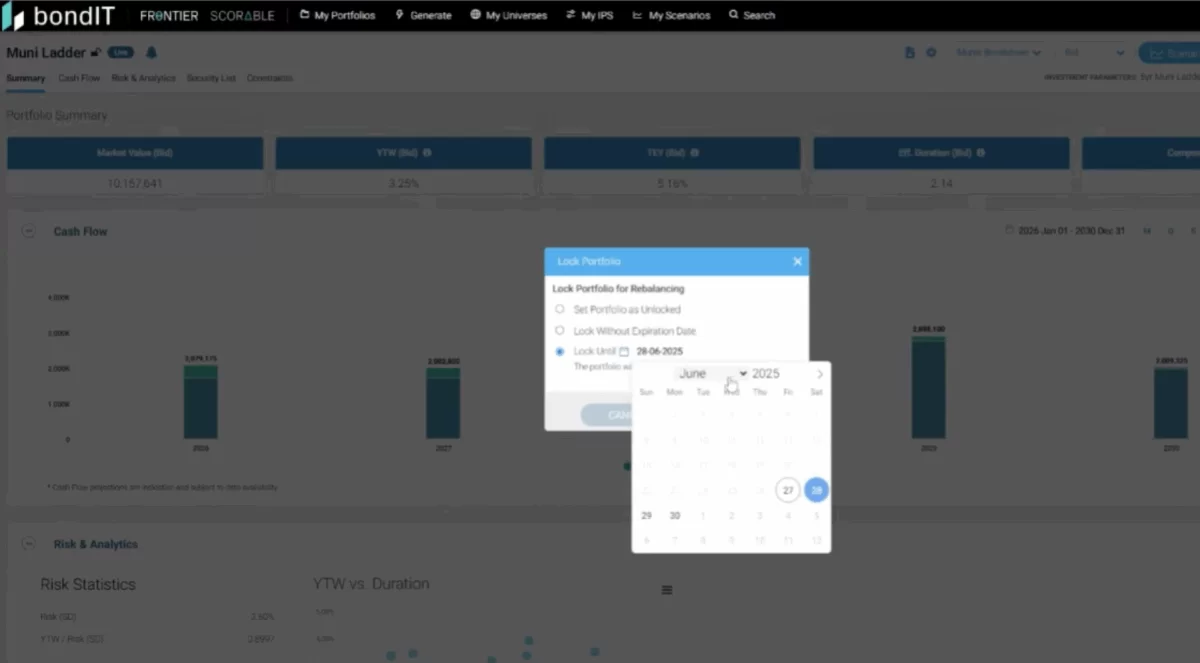
In the bondIT platform admin users can now lock live portfolios to temporarily block rebalancing actions, ensuring no proposals can be created during sensitive periods such as trade settlements or compliance-related holds.  When a portfolio is locked, rebalancing actions in both “Portfolio View” and “My Portfolios” screens are disabled, with clear tooltips to guide users.

Find out more in the video below.